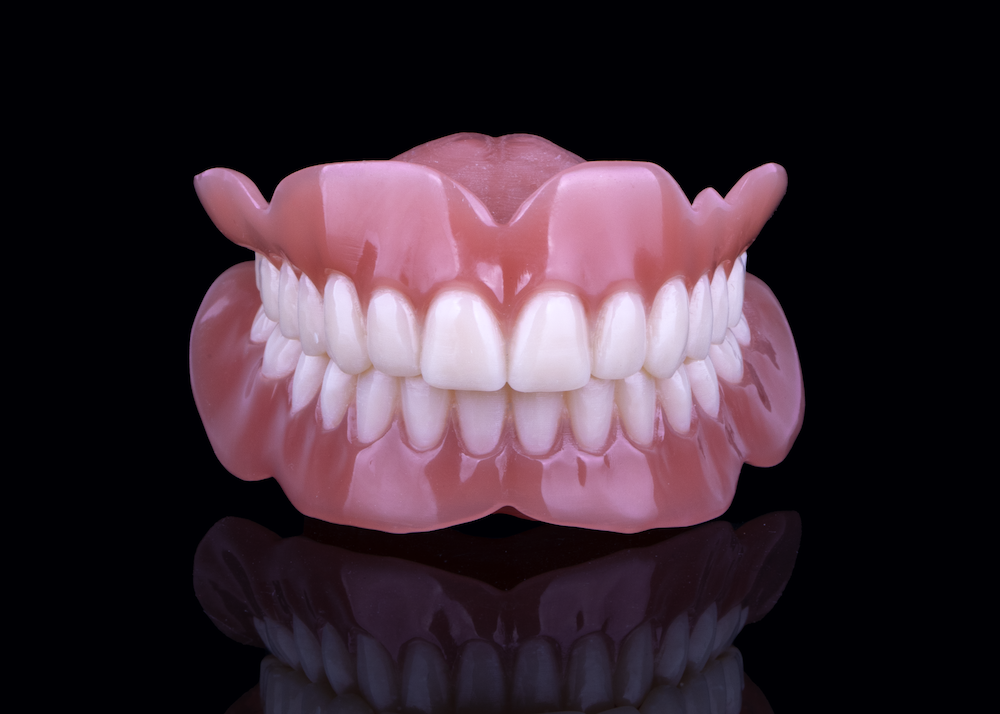
The Evolution of Digital Dentures: How We Bring Innovation to Market

By Holly Vullo
Lab Manager at RTG Dental Lab, a MicroDental Laboratory
We don’t bring products to market quickly. We bring them to market when they work.
Four years ago, our work on digital dentures started with something deceptively simple: shade matching. In reality, it wasn’t simple at all. In prosthetics, even minor inconsistencies are immediately visible. If color isn’t consistent, nothing else matters. That early work forced a level of precision and repeatability that digital workflows hadn’t consistently achieved, and it set the standard for everything that followed.
From there, the real challenge began.
Material science quickly became the constraint. Early printable resin materials forced a choice: strength or esthetics. Some held up under functional load but lacked the lifelike quality required for high-end prosthetics. Others looked right but failed under stress. We rejected both outcomes. If a material couldn’t meet both standards, it wasn’t viable.
That decision slowed progress, but it defined the product.
Development became a cycle of testing, failure, and refinement. Promising resin materials would fracture, wear prematurely, or lose consistency across builds. Each setback forced adjustments, not just in materials, but in how we approached the entire process. Over time, those iterations began to shift from trial-and-error to something more controlled and intentional.
A meaningful turning point came when we brought in engineers from outside dentistry, including talent from Xerox. That shifted how we approached the problem. Instead of continuing through trial-and-error iteration, we began building a more controlled, engineering-driven process focused on precision and repeatability. Combined with the RTG team, this moved development from incremental progress to something far more predictable and scalable.
This isn’t about printing dentures faster.
It’s about eliminating the tradeoff between efficiency and quality. The goal has been to maintain the integrity of a high-end prosthesis while improving consistency and production capability. That’s what makes digital dentures viable, not just as an innovation, but as a dependable solution.
For clinicians, that means fewer compromises. Materials that perform under real-world conditions. Esthetics that meet patient expectations. And a process that delivers consistent results, case after case.
We’re not finished. There’s still work to do. Innovation always demands more.
But we’ve moved beyond experimentation. We’re building something repeatable, and that’s when innovation starts to matter, when you begin to reshape the future. Specifically, the future of digital dentures.
About the Author
Holly Vullo
With more than 30 years in the dental lab industry, Holly has played a key role in the transition from analog to fully digital workflows. Her background spans complex implant cases, esthetics, phonetics, and removables, with thousands of full-mouth rehabilitations completed across nearly every implant system.
As a Lab Manager and long-time educator, she has built training programs, streamlined workflows, strengthened lab–clinician partnerships, and supported university residency programs through teaching and collaborative case planning.
Fewer Appointments. Fewer Failures. Better Denture Cases.
Deliver complete dentures in as few as two visits—without the common tooth pop-off issues of traditional workflows.